


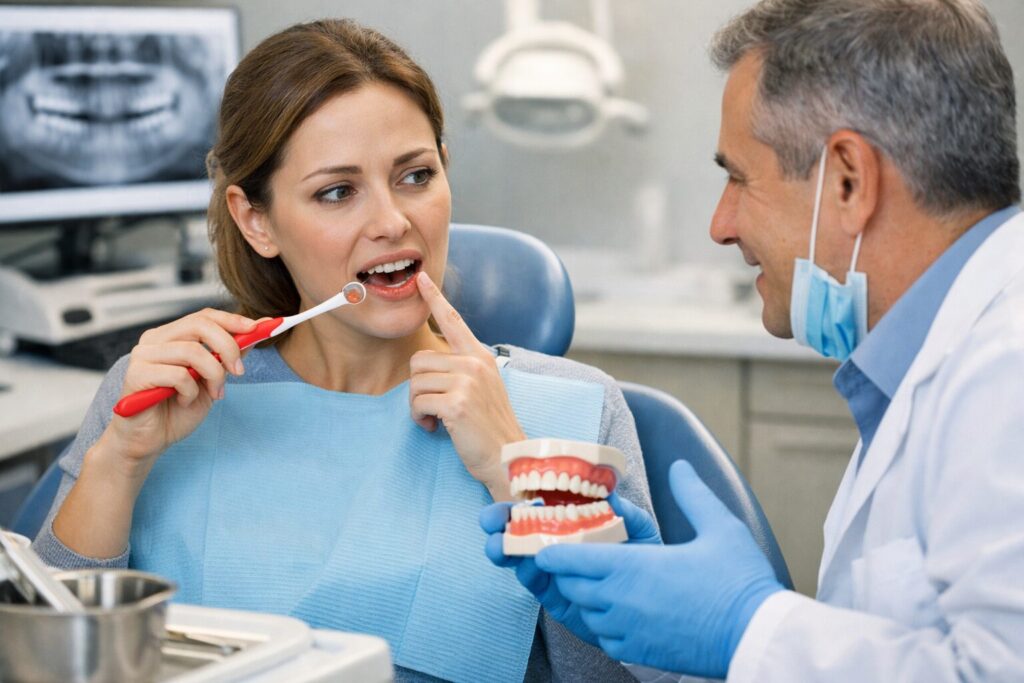
If your gums bleed when you brush, it is easy to assume it is nothing serious. In some cases, minor irritation may be the cause. However, bleeding gums can also be one of the earliest signs of gum disease. Knowing what causes bleeding gums and when to seek care can help protect your smile and support long-term oral health.
What Causes Gums to Bleed?
Bleeding gums can happen for several reasons. Sometimes the cause is temporary, but in other cases it may signal inflammation or infection that should not be ignored.
Early Gum Disease
One of the most common causes of bleeding gums is gingivitis, the earliest stage of gum disease. Plaque buildup along the gumline irritates the tissue and can cause redness, swelling, and bleeding during brushing or flossing.
Brushing Too Hard
Using too much pressure or a toothbrush with hard bristles can irritate the gums. Even patients with otherwise healthy gums may notice bleeding if they are brushing aggressively.
Changes in Flossing Habits
If you have recently started flossing again after a long break, your gums may bleed at first. This often improves as inflammation decreases and the tissue becomes healthier.
Medical or Medication Factors
Certain medications, vitamin deficiencies, hormonal changes, and health conditions can also contribute to gum bleeding. If symptoms continue, a dental evaluation is a good next step.
When Bleeding Gums May Be a Warning Sign
Occasional mild bleeding may not always mean there is a serious problem, but persistent or frequent bleeding should be evaluated. If your gums bleed regularly, feel swollen, look red, or are beginning to pull away from the teeth, gum disease may be developing.
Untreated gum disease can affect more than your gums. As inflammation progresses, it can damage the bone and tissues that support your teeth. This can eventually lead to loose teeth, gum recession, and tooth loss.
How to Improve Gum Health at Home
Good home care plays an important role in reducing gum inflammation and preventing future problems.
- Brush gently twice a day with a soft-bristled toothbrush
- Floss consistently to remove plaque between teeth
- Use an antibacterial mouth rinse if recommended by your dentist
- Keep up with regular professional cleanings
When to See a Dentist for Bleeding Gums
If your gums continue to bleed after improving your brushing and flossing routine, it is time to schedule an exam. A dentist can determine whether the cause is early gingivitis, more advanced periodontal disease, or another oral health issue.
According to the American Dental Association, healthy gums should not bleed regularly during normal brushing and flossing. You can read more here:
American Dental Association – Gingivitis.
Frequently Asked Questions About Bleeding Gums
Is it normal for gums to bleed when brushing?
Healthy gums should not bleed regularly during brushing. Occasional irritation can happen, but consistent bleeding is often a sign of inflammation or early gum disease that should be evaluated.
Can brushing too hard cause bleeding gums?
Yes. Brushing too aggressively or using a hard-bristled toothbrush can irritate gum tissue and lead to bleeding. A soft-bristled toothbrush and gentle technique are recommended for better gum health.
Do bleeding gums always mean gum disease?
Not always, but gum disease is one of the most common causes. Bleeding can also result from poor oral hygiene, changes in flossing habits, or certain medical conditions.
When should I see a dentist for bleeding gums?
You should schedule an evaluation if your gums bleed frequently, appear swollen or red, or if the bleeding does not improve after improving your brushing and flossing routine.
Can bleeding gums be reversed?
In many cases, early gum inflammation such as gingivitis can be reversed with proper home care and professional cleanings. More advanced gum disease may require specialized periodontal treatment.
Care for Patients in Franklin Square and Levittown
Island Dental Associates helps patients in Franklin Square, Levittown, West Hempstead, East Meadow, Bethpage, Baldwin, Lynbrook, and nearby South Shore communities understand the early signs of gum problems and take action before they worsen.
Learn more about your treatment options:
Periodontal (Gum Disease) Treatment
Comprehensive Dental Services
Request an Appointment
Schedule a Gum Health Evaluation
If your gums bleed when you brush or floss, a professional evaluation can help identify the cause and guide the right treatment. Early care can make a meaningful difference in protecting your teeth, gums, and overall oral health.
Franklin Square:
516-565-6565
639 Hempstead Turnpike, Franklin Square, NY 11010
Levittown:
516-865-6565
307 Hempstead Turnpike, Levittown, NY 11756
Request an appointment online:
Schedule Your Visit
Always consult with your Dentist: You should always seek the advice of your dentist to make sure which options are best for you. Dental conditions vary widely among individuals. Not all dental problems are visible or easily detectable. Professional cleanings are essential, regardless of how diligent your oral hygiene routine is. Regular dental check-ups help detect potential issues early. Dentists are trained to provide expert advice on oral hygiene and other factors that impact your dental health. Online information may need more depth and accuracy to address your specific needs.